

Technical.
The details that make the difference.
A fire that performs well for years doesn't happen by accident. It's the result of the right appliance, properly installed, correctly fuelled, and looked after with care. This page is for those who want to understand a little more about what goes into getting that right.
Getting the installation right
A wood or pellet fire isn't something you simply position in a room and plug in.
Installation involves clearances, hearth requirements, flue design, ventilation and the manufacturer's specifications. Depending on the appliance and property, building consent is also required.
For a new build, these decisions can be made early and incorporated beautifully into the architecture. For a renovation or replacement, we work with what's already there, existing hearths, chimneys and flues, and find the best way to make a new appliance perform within the space.
Our installation team understands the practical details. But we also understand that a fire is part of your home. Where it sits, how it looks, and how heat moves through the space all matter.
Good installation isn't just about compliance.
It's about making sure your fire performs the way it should.
Fuel and performance
Different fires. Different ways of living.
For a wood fire, the quality of fuel makes a real difference. Dry, seasoned firewood burns more efficiently, produces more useful heat and creates less smoke. In Canterbury, fuel requirements also form part of the region's clean-air approach.
A pellet fire works differently. Pellets are automatically fed into the combustion chamber, with many models offering thermostatic control, timers and adjustable heat settings. A remarkably convenient way to maintain a comfortable temperature without the regular loading of a traditional wood fire.
Electric fires require no wood to store, no flue and no ash to clean. Some are designed primarily to create atmosphere, while others provide genuine room heating with controllable heat and flame effects that can be used independently.
Our job is to help you understand the difference and find the fuel type that fits the way you actually live.
Heat output and efficiency
A fire's heat output is important. But it's only part of the story.
Efficiency, emissions, room size, insulation, ceiling height, glazing and the layout of your home all influence how effectively a fire heats your space. A fire that's too small can struggle to keep up. One that's too large may be unnecessarily difficult to run efficiently.
Manufacturer heating-area figures are a starting point. Not the whole answer.
We look at the bigger picture. How your home holds heat, where you want that heat to go, and how you actually want to use your fire. Because the best-performing fire is the one that's properly matched to the home it's heating.
Servicing
Like anything that works hard for your home, a fire needs a little care in return.
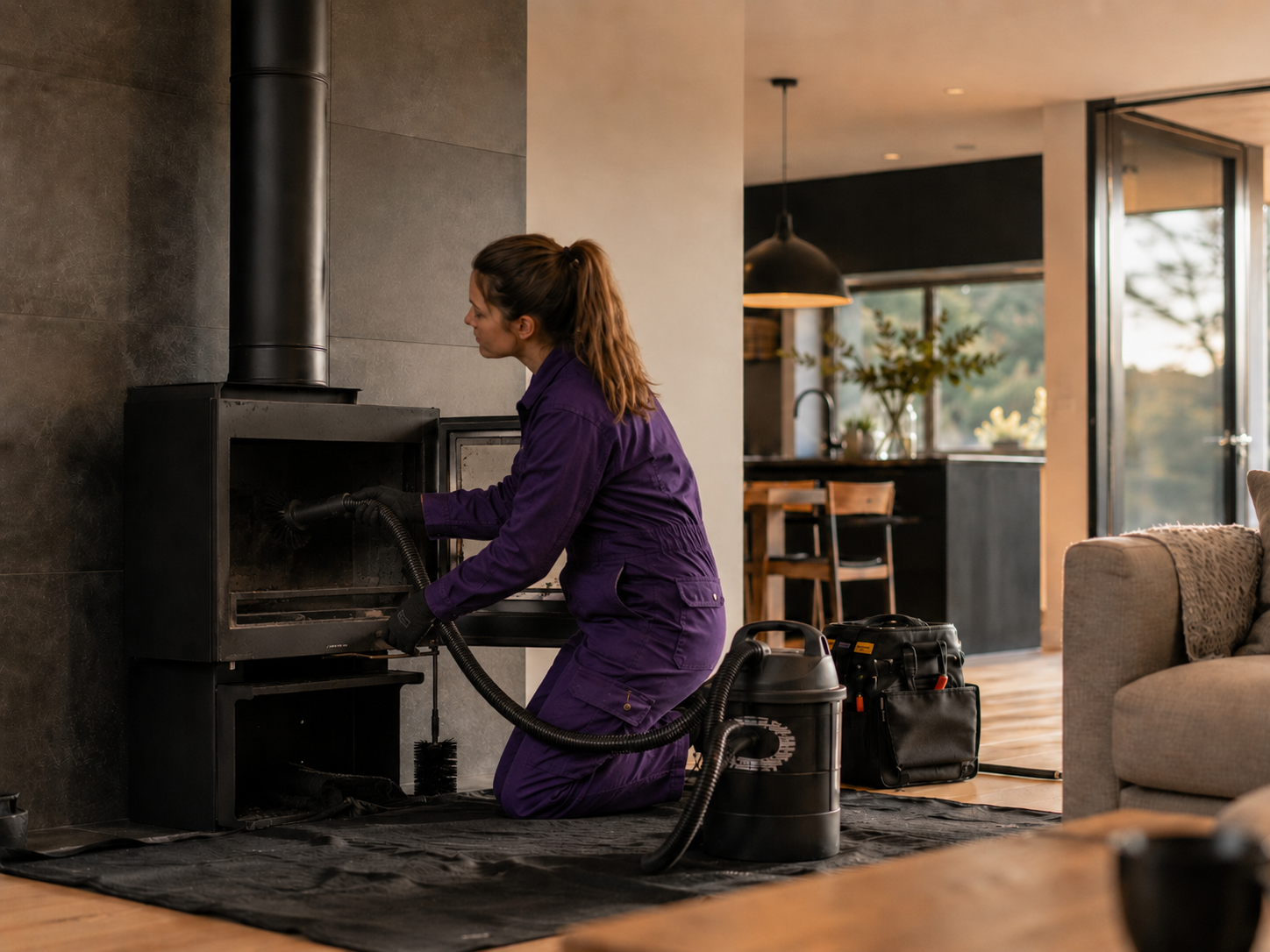
Regular servicing keeps your appliance operating safely and efficiently, and identifies worn components or potential problems before they become bigger ones. Wood fires may require chimney sweeping and inspection. Pellet fires have combustion chambers, fans, motors and feed systems that need regular attention.
Some everyday maintenance can be carried out at home. Other work is best left to an experienced technician.
Looking after your fire isn't complicated. But it is important.
Repairs
Even the best fire can eventually need attention.
Perhaps it isn't lighting properly. The glass is blackening, the heat output has dropped, or a pellet appliance isn't feeding correctly. Sometimes it's a simple fix. Sometimes a component needs replacing.
Either way, we'd rather you talk to us than spend hours trying to work out what's wrong. Our team can assess the problem, identify the cause and advise on the best way forward. And when your appliance is covered by a manufacturer's warranty, we'll help you understand what happens next.
Because buying a fire won't be the end of your relationship with Heatstore.